
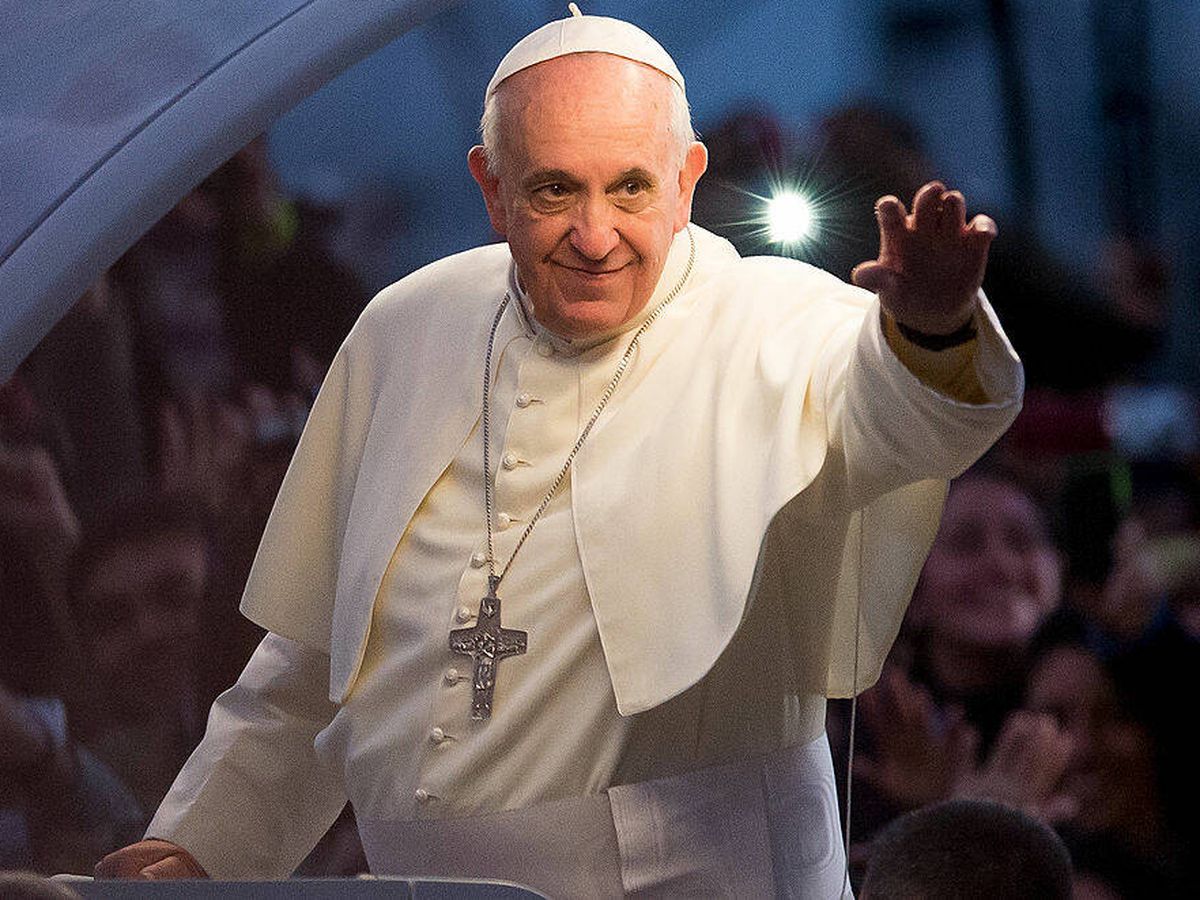
Pope Francis: The People’s Pontiff
When Jorge Mario Bergoglio was elected the 266th Pope of the Catholic Church on March 13, 2013, the world witnessed a historic event. He became not only the first Latin American and the first Jesuit Pope, but also the first to take the name Francis, in honor of Saint Francis of Assisi—the saint of humility, peace, and the poor. That gesture was a declaration of intent from the outset: Francis would be a different kind of Pope.
A Pope from «the end of the world»
Born in Buenos Aires, Argentina, on December 17, 1936, Jorge Bergoglio was the son of Italian immigrants. Before entering the seminary, he studied chemistry, worked as a lab technician, and, interestingly, as a nightclub bouncer—a little-known detail that later sparked both surprise and affection. He joined the Society of Jesus in 1958, a religious order known for its commitment to education, social justice, and defending the poor.
During Argentina’s military dictatorship (1976–1983), Bergoglio served as provincial superior of the Jesuits in the country. His role during that era has been debated—some accused him of not doing enough to protect the persecuted, while others credit him with saving lives. What is clear is that he always kept close to the poor and lived a life of austerity. Years later, as Archbishop of Buenos Aires, he took public transportation and lived in a modest apartment instead of the archbishop’s palace.

A gesture that marked a new era
On the balcony of St. Peter’s Basilica the night he was elected, Francis addressed the world with moving humility: before blessing the faithful, he asked them to pray for him. Instead of a grand speech, there was silence, prayer, and closeness. From that moment, he broke away from traditional protocol. He preferred a Fiat or even a bus with fellow cardinals over the bulletproof Popemobile. His pectoral cross was silver, not gold, and he kept wearing his old black shoes rather than the customary red papal footwear.
A revealing anecdote: The embrace of Vinicio Riva

One of the most powerful images of Francis’ papacy occurred in November 2013 when he embraced Vinicio Riva, an Italian man with neurofibromatosis, a condition that severely disfigures the face and body. Francis kissed his tumors and held him with tenderness. The image went viral. “He didn’t say anything. He just hugged me. I felt like it was the love of God,” Riva said.
These gestures have defined his papacy. Francis leads by example, constantly reminding the world that Christianity must be lived in practice—especially in service to the marginalized.
The Pope who listens and travels
Francis traveled the world, visiting places marked by war, poverty, and discrimination. He went to refugee camps, prisons, hospitals, slums, and conflict zones. In 2015, during a visit to the Greek island of Lesbos, he brought back three Syrian Muslim refugee families to the Vatican to offer them asylum.
He spoke strongly against human trafficking, corruption, environmental degradation, and unbridled capitalism. In his encyclical Laudato Si’, he issued an urgent call to care for our common home, blending faith and ecology in an unprecedented way. He addressed issues like climate change, migration, and the dignity of labor with deep humanity.
Controversies and criticisms
Naturally, his direct style and openness sparked both admiration and resistance. He was criticized by conservative sectors of the Church, especially for his inclusive tone toward remarried divorcees, LGBTQ+ individuals, and his efforts to decentralize church authority.
In 2018, after a clerical sexual abuse scandal in Chile, he was heavily criticized for initially defending a bishop accused of cover-up. He later apologized, admitted his error, and met with victims. Since then, he pushed for significant reforms in handling abuse cases, although many believe more work is still needed.
Francis’ spirituality
Francis wasn’t just an institutional leader—he was deeply spiritual. He was often seen praying in silence, bowing before the poor, washing the feet of prisoners, embracing children with disabilities. In his sermons and writings, he emphasized mercy, tenderness, compassion, and joy. He spoke with clarity, often with humor, and was unafraid to challenge the powerful. “The devil enters through the pocket,” he once said, denouncing the idolatry of money.
One of his key focuses was synodality—making the Church walk together, where every voice is heard. He convened synods on family, the Amazon, and most recently, on synodality itself, seeking a more participatory and less hierarchical Church.
A pope with his feet on the ground and his heart in heaven
One of the most personal stories Francis shared was the moment he decided to become a priest. At 17, he stopped by his parish before going out with friends. Inside the confessional, he had a profound spiritual experience. “I felt that God was waiting for me,” he said. From then on, he never doubted his calling to serve.
In his own words, he never saw himself as special: “I am a sinner upon whom the Lord has looked.” And perhaps that phrase sums up his appeal: he never presented himself as an unreachable saint, but as someone with struggles, doubts, and immense compassion.
The legacy of Francis

Pope Francis passed away on April 21, 2025, at the age of 88, leaving behind a profound sense of loss among the millions who saw in him a different kind of leader: humble, approachable, courageous, and deeply human. During his papacy of over 12 years, he reshaped the papal role with small but powerful gestures and a vision of the Church that was more open, compassionate, and centered on the margins.
His legacy is not measured only by documents or reforms, but by the hearts touched by his message. He will be remembered as the Pope who walked with the poor, who challenged power with tenderness, and who envisioned a Church less self-absorbed and more missionary. As he once said: “I prefer a Church that’s bruised, hurting, and dirty because it has been out on the streets, rather than a Church which is unhealthy from being confined and from clinging to its own security.”
And that is how he will be remembered—not for titles or ceremony, but for truly embodying the Gospel. A shepherd who smelled of his sheep, who never forgot his roots “at the end of the world,” and who spoke to the heart of the entire world.