
- Landmark (noun) – A significant or well-known place, often with historical or cultural importance.
Example: The Gum Wall has become a famous landmark in Seattle.
- Quirky (adjective) – Unusual in an interesting or unique way.
Example: The Gum Wall is one of the quirkiest attractions in the city.
- Mosaic (noun) – A pattern or image created by assembling small pieces of different materials.
Example: The layers of colorful gum form a sticky mosaic on the wall.
- Eccentric (adjective) – Slightly strange or unconventional.
Example: The tradition of sticking gum to a wall may seem eccentric, but it has become a beloved
Seattle custom.
- Preserve (verb) – To maintain or keep something in its existing state.
Example: Some people believe the Gum Wall should be preserved as a piece of urban art.
- Spontaneous (adjective) – Done or created without planning; happening naturally.
Example: The Gum Wall started as a spontaneous habit among theatergoers but evolved into a
famous attraction.
The Gum Wall: Seattle’s Sticky Spectacle
Seattle is home to breathtaking landscapes, world-famous coffee, and a thriving arts scene. But nestled
within the historic Pike Place Market, just outside the Market Theater, lies one of the city’s quirkiest
attractions—the Gum Wall. This unexpected and colorful landmark has transformed from a small, peculiar
habit into a vibrant, ever-evolving piece of urban art.
A Sticky Tradition
The origins of the Gum Wall date back to the early 1990s when patrons waiting in line for shows at the
Market Theater began sticking chewed gum onto the wall. Some even pressed coins into the gum, creating
an odd but intriguing collage. Theater staff initially tried to remove the gum, but the trend proved
unstoppable. No matter how many times the wall was scrubbed clean, visitors continued to add their
contributions. Eventually, authorities gave up on cleaning efforts and embraced the site as an artistic and
cultural oddity.
A Living, Chewy Masterpiece
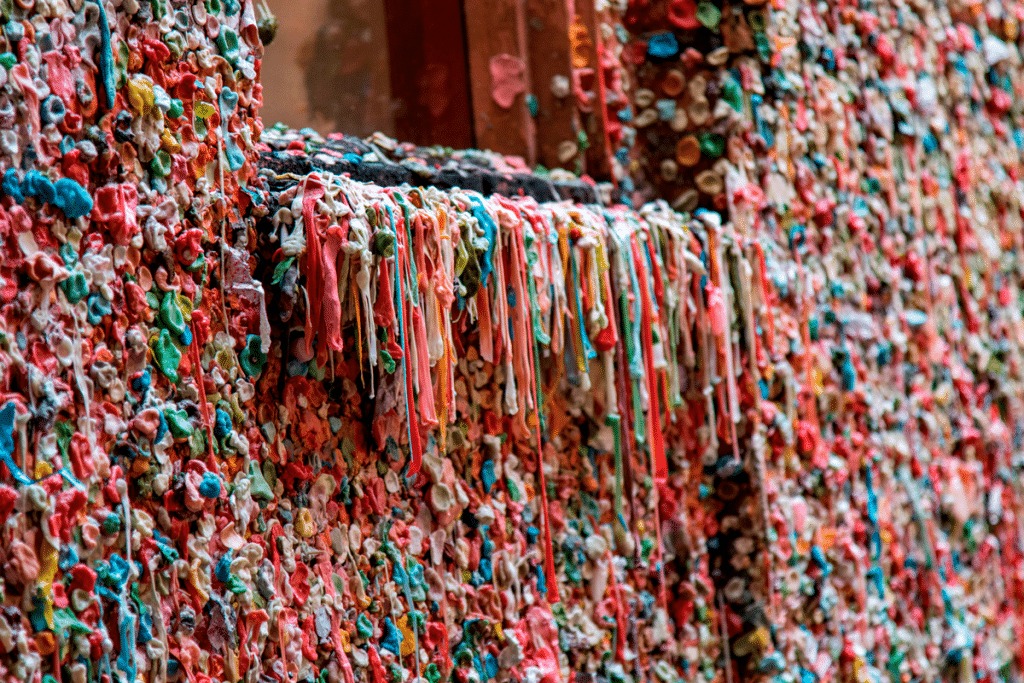
What started as a spontaneous, almost rebellious act has now become a recognized landmark. Today, the
Gum Wall is covered in layers upon layers of gum, stretching across a 50-foot-long brick wall and reaching
heights of up to 15 feet. The kaleidoscope of colors, shapes, and even messages left in gum has turned this
once-ordinary alley into an ever-changing canvas of public expression.
Despite its rather unsanitary nature, the wall is a major attraction for tourists and photographers looking for a
unique Seattle experience. Some visitors even use the gum to create words, patterns, or images, adding a
personal touch to the sticky mosaic.
A Love-Hate Relationship
While the Gum Wall is undeniably fascinating, not everyone is enamored with its existence. Some see it as
an eyesore, a hygiene hazard, or simply an oddity that has gotten out of hand. In 2015, the city undertook a
massive cleaning operation to remove an estimated 2,350 pounds of gum. However, true to tradition, visitors
quickly began adding fresh layers, ensuring the Gum Wall’s legacy would continue.
Seattle residents and tourists alike remain divided—some celebrate the wall as a piece of spontaneous art
and cultural history, while others see it as a slightly gross but amusing spectacle. Regardless of opinion, it’s
hard to deny that the Gum Wall has cemented its place (quite literally) in Seattle’s list of must-visit attractions.
Visiting the Gum Wall
If you plan to visit, you’ll find the Gum Wall in Post Alley, just below Pike Place Market. It’s free to see, and
many visitors bring their own gum to leave their mark. Whether you find it fascinating, disgusting, or both,
it’s a uniquely Seattle experience that showcases the city’s quirky and creative spirit.
So, if you’re in Seattle, why not chew on the idea of visiting this one-of-a-kind attraction? Just remember—
look, photograph, contribute if you dare—but maybe don’t touch!
Comprehension Questions:
- Where is the Gum Wall located?
- How did the tradition of sticking gum on the wall begin?
- What happened when authorities tried to clean the wall in 2015?
- How has the Gum Wall transformed over time?
- Why do some people view the Gum Wall as a cultural landmark while others see it as an eyesore?
Discussion Questions:
- Do you think the Gum Wall is a form of art or just a mess? Why?
- If you visited the Gum Wall, would you contribute a piece of gum? Why or why not?
- Are there any other places you know of where people have turned an unusual habit into a public attraction?
- How do cities balance preserving quirky traditions with keeping public spaces clean and sanitary?
- What do you think the future of the Gum Wall should be—preserved, cleaned regularly, or removed entirely? why?
Sample Answers for Comprehension Questions:
- Where is the Gum Wall located?
The Gum Wall is located in Post Alley, just below Pike Place Market in Seattle, near the Market
Theater.
- How did the tradition of sticking gum on the wall begin?
It started in the early 1990s when patrons waiting in line for shows at the Market Theater began
sticking chewed gum onto the wall. Some even added coins to the gum as a quirky habit.
- What happened when authorities tried to clean the wall in 2015?
In 2015, the city undertook a major cleaning operation and removed an estimated 2,350 pounds of
gum. However, visitors quickly started adding new gum, and the tradition continued.
- How has the Gum Wall transformed over time?
It has grown into a large, colorful, ever-changing piece of public art, stretching about 50 feet long
and up to 15 feet high. People now create shapes, words, and designs with their gum, turning it into
a form of expression.
- Why do some people view the Gum Wall as a cultural landmark while others see it as an
eyesore?
Some see it as a unique piece of urban art and a reflection of Seattle’s creative spirit, while others
think it is unhygienic and an unattractive mess that should be removed or cleaned more frequently.
Sample Answers for Discussion Questions:
- Do you think the Gum Wall is a form of art or just a mess? Why?
I think it’s a form of spontaneous public art because it represents creativity and individuality. Even
though it may not be traditional art, it has become a well-known landmark that people interact with
in a unique way.
- If you visited the Gum Wall, would you contribute a piece of gum? Why or why not?
I probably wouldn’t because it seems unsanitary, but I would still visit and take pictures since it’s
such a famous and unusual attraction.
3.Are there any other places you know of where people have turned an unusual habit into a
public attraction?
Yes! The Love Lock Bridge in Paris is a good example. People started attaching padlocks to the
bridge as a symbol of love, and it became a popular tradition, just like the Gum Wall.
4.How do cities balance preserving quirky traditions with keeping public spaces clean and
sanitary?
They can set rules about maintenance and designate specific areas for these traditions. For example,
the Gum Wall could have scheduled cleanings to keep it from becoming too overwhelming.
- What do you think the future of the Gum Wall should be—preserved, cleaned regularly, or
removed entirely? Why?
I think it should be cleaned occasionally to prevent excessive buildup, but it should remain because it
has become a famous part of Seattle’s culture. It’s something that makes the city unique and fun for
visitors.
+ information 672 282 884 CRISTIAN